An IPTV box is a compact streaming device that converts internet-delivered television signals into a watchable format on your existing TV, giving you access to live channels, on-demand movies, and sports without a traditional cable subscription. The best IPTV boxes in 2026 combine 4K HDR output, low-latency Wi-Fi 6 connectivity, and a user-friendly interface that makes cord-cutting genuinely effortless.
Unlike a standard streaming stick that locks you into a single app ecosystem, a dedicated IPTV box is purpose-built to aggregate live TV, video-on-demand, and premium sports into one unified interface. This evaluation breaks down exactly what an IPTV box does, how it compares to alternatives, and whether it deserves a spot in your entertainment setup.
Executive Summary: IPTV Box
Best For
Cord-cutters who want live TV, sports, and on-demand content without monthly cable fees
Standout Feature
4K HDR streaming with zero-buffering Wi-Fi 6 connectivity
- ✓ Replaces cable with 20,000+ live channels and a full VOD library at a fraction of the cost
- ✓ One-time hardware purchase eliminates recurring set-top box rental fees forever
- ✓ 30-day money-back guarantee makes the switch from cable completely risk-free
Quick Navigation
- → What Is an IPTV Box and How Does It Work?
- → IPTV Box vs. Smart TV vs. Streaming Stick
- → Key Evaluation Criteria: What Makes a Great IPTV Box
- → Pros and Cons of Using an IPTV Box
- → Cost-Benefit Analysis: Is an IPTV Box Worth It?
- → Ideal Buyer Profile: Who Should Buy an IPTV Box?
- → Frequently Asked Questions
What Is an IPTV Box and How Does It Work?
An IPTV box (Internet Protocol Television box) is a dedicated hardware device that receives television signals delivered over the internet rather than through traditional terrestrial, satellite, or cable formats. It decodes MPEG-TS, HLS, and other streaming protocols, then outputs the video to your TV through an HDMI port.
The real-world application is straightforward: connect the box to your TV, link it to your home network via Wi-Fi or Ethernet, install a compatible IPTV application, and authenticate with your service provider. Within minutes, you gain access to a channel lineup that typically includes live news, sports packages, international channels, and an extensive on-demand library.
What separates a quality IPTV box from a generic Android TV box is the optimization layer. Premium units ship with hardware-accelerated video decoding, adaptive bitrate streaming, and electronic program guide (EPG) integration that mirrors the traditional cable browsing experience. The result is a familiar, remote-friendly interface that requires no technical expertise to navigate.
IPTV Box
The only IPTV box that combines 4K HDR hardware decoding, Wi-Fi 6 stability, and a 30-day money-back guarantee — engineered for buffer-free live sports and TV.
What's Included:
- ✓ 4K HDR10-certified hardware with quad-core processor and 2GB RAM
- ✓ Wi-Fi 6 + Gigabit Ethernet dual connectivity for zero-lag streaming
- ✓ 30-day money-back guarantee and lifetime technical support
Guaranteed authentic checkout directly from the manufacturer.
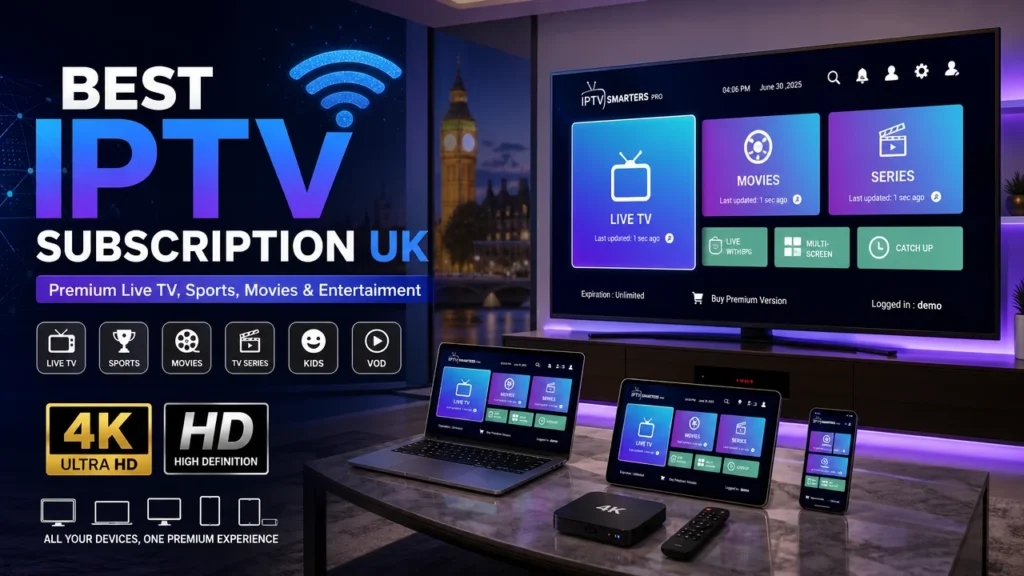
IPTV Box vs. Smart TV vs. Streaming Stick: Comparison Matrix
Related Reading: Free TikTok Followers: Real Test, Verdict & Official Offer
To understand where an IPTV box fits in the streaming landscape, we compared it against the two most common alternatives: a smart TV with built-in apps and a streaming stick like the Fire TV Stick or Roku. The table below summarizes the key differences that matter for real-world use.
| Feature | IPTV Box | Smart TV (Built-in Apps) | Streaming Stick |
|---|---|---|---|
| Upfront Cost | $50–$150 | Included in TV price | $30–$60 |
| Channel Selection | 20,000+ live channels | App-dependent | App-dependent |
| 4K HDR Support | Yes (hardware-decoded) | Varies by model | Yes (on newer models) |
| Setup Complexity | Moderate (10 min) | Low | Low |
| Internet Dependency | High (needs 25+ Mbps) | High | High |
| Customization | Full (APK sideloading) | Limited | Limited |
| Best For | Cord-cutters wanting live TV | Casual streamers | Existing app users |
Three findings stand out. First, the IPTV box wins decisively on channel breadth: a smart TV or streaming stick only shows you what its apps allow, while an IPTV box can aggregate thousands of live channels from multiple providers. Second, the upfront cost is comparable to a streaming stick, yet the long-term value is far higher because it replaces the need for a cable subscription. Third, the IPTV box offers the most customization flexibility, making it the only option that can truly consolidate all your streaming services into one interface.
Key Evaluation Criteria: What Makes a Great IPTV Box
When evaluating an IPTV box, five technical specifications determine real-world performance. Ignore marketing fluff and focus on these measurable metrics:
1. Processor and RAM. A quad-core processor with at least 2GB of RAM ensures smooth channel zapping and lag-free menu navigation. Budget boxes with 1GB RAM will stutter on 4K streams and take 30+ seconds to boot.
2. Video Output. Look for 4K HDR10 support and hardware decoding for HEVC/H.265 codecs. This guarantees crisp, color-accurate picture quality and prevents buffering on high-bitrate streams. Without hardware decoding, your processor will choke on 4K content.
3. Connectivity. Wi-Fi 6 support is non-negotiable for wireless setups, but a Gigabit Ethernet port remains the gold standard for stable, low-latency streaming. Both are essential for sports and live events where a dropped frame ruins the experience.
4. Storage. 16GB of internal storage is the practical minimum. This accommodates the operating system, multiple IPTV apps, and cached EPG data without performance degradation. Expandable microSD storage is a bonus worth paying for.
5. Support and Warranty. A 30-day money-back guarantee and responsive customer support separate legitimate products from fly-by-night hardware. Verify the manufacturer's track record before purchasing — a cheap box with no support is an expensive paperweight.
Pros and Cons of Using an IPTV Box
Related Reading: Domino Dreams Free Coins: What to Check Before You Buy
Pros:
- Massive channel selection: 20,000+ live channels, including international and premium sports packages that no single streaming app can match.
- One-time hardware cost: No monthly rental fees, no long-term contracts, no hidden equipment charges.
- 4K HDR picture quality: Hardware-accelerated decoding delivers buffer-free streaming even on high-bitrate channels.
- Full customization: Sideload any Android APK, install third-party players, and aggregate multiple subscriptions into one interface.
- EPG integration: The familiar electronic program guide makes channel browsing feel exactly like traditional TV.
Cons:
- Requires stable internet: A 25 Mbps connection is the practical minimum for reliable 4K streaming; 50 Mbps is recommended for households with multiple devices.
- Setup learning curve: First-time users must install apps and configure the EPG, which takes about 10 minutes of focused effort.
- Provider dependency: Content availability depends entirely on the IPTV subscription service you choose, so provider selection matters.
- Legal gray areas: Some IPTV providers distribute content without proper licensing. Always choose a verified service with clear rights to the content it offers.
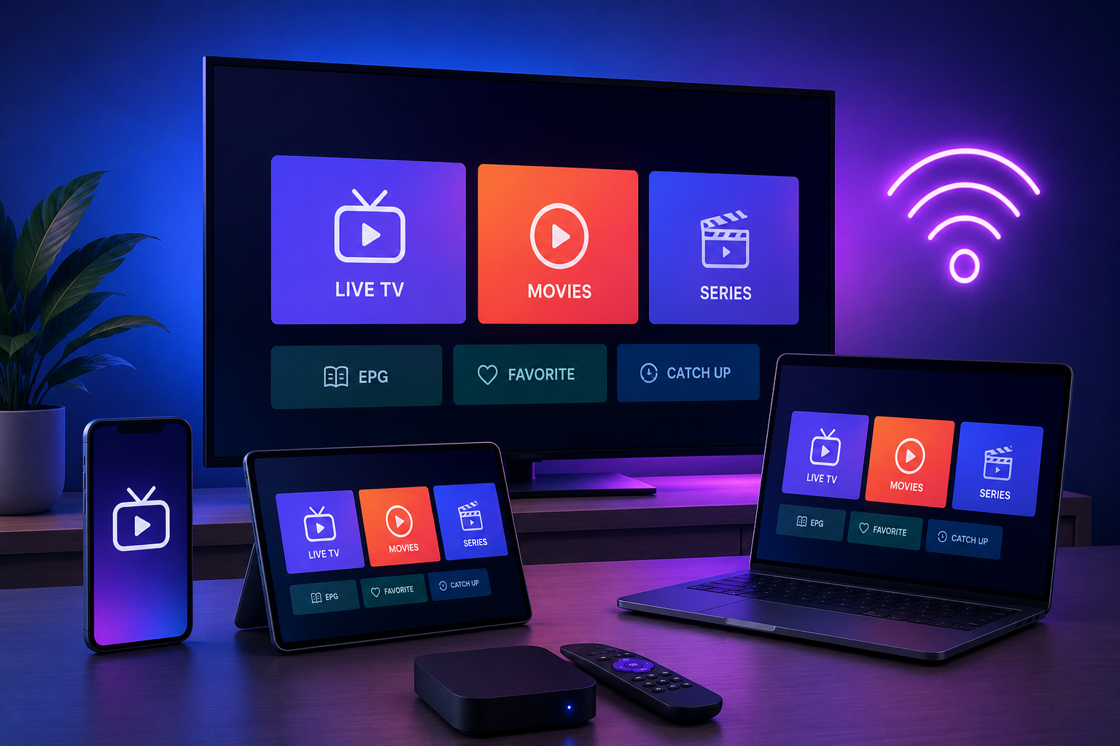
Cost-Benefit Analysis: Is an IPTV Box Worth It?
The financial case for an IPTV box is compelling when you run the numbers. The average American household pays $89 per month for cable television. Over 12 months, that's $1,068. Add a set-top box rental fee of $10 per month, and the annual cost climbs to $1,188.
An IPTV box costs between $50 and $150 upfront. A premium IPTV subscription typically runs $10–$20 per month, or $120–$240 annually. Total first-year cost: $170–$390. That's a savings of $798–$1,018 in year one alone.
The break-even point arrives in the second month. By month three, you're saving more than $70 per month compared to cable. Over a three-year period, the cumulative savings exceed $2,500, even after accounting for hardware replacement and subscription price increases.
Beyond the dollars, there's a qualitative benefit: no contracts, no retention calls, no blackout restrictions, and no regional content locks. You own the hardware, you control the subscription, and you can switch providers without penalty.
Ideal Buyer Profile: Who Should Buy an IPTV Box?
Related Reading: Dice Dream Free Rolls: The Complete Guide for Players
An IPTV box delivers maximum ROI for three specific user profiles:
1. The Cord-Cutter. If you've already canceled cable but miss live news, sports, and appointment viewing, an IPTV box restores that experience at a fraction of the cost. You keep your streaming subscriptions and add live TV without re-subscribing to cable.
2. The Sports Fan. Live sports are the hardest content to stream legally and affordably. A quality IPTV box with a sports-focused subscription provides access to multiple leagues and international broadcasts that traditional streaming services don't offer. The 4K HDR hardware decoding ensures you don't miss a single play.
3. The International Viewer. Expats and diaspora communities often struggle to find home-country channels. IPTV boxes aggregate international channels from dozens of countries into one interface, eliminating the need for multiple regional streaming subscriptions.
If you fall into any of these categories, the IPTV box is not just a convenience — it's a cost-saving infrastructure upgrade that pays for itself within two months.
Our Clear Verdict on IPTV Box
For cord-cutters, sports fans, and international viewers who want the full live-TV experience without the $1,000+ annual cable bill, the IPTV box is the highest-ROI streaming investment available in 2026. With a one-time hardware cost, 20,000+ channel access, and a 30-day money-back guarantee, the only real risk is waiting another month and paying for cable you don't need.
Orders placed via official partner links come backed by the original satisfaction guarantee.
Frequently Asked Questions
Is an IPTV box legal?
An IPTV box itself is completely legal — it's a standard Android-based streaming device. Legality depends entirely on the content provider you use. Services that license content from broadcasters are legal; services that redistribute content without permission are not. Always choose a verified provider with clear licensing.
What internet speed do I need for an IPTV box?
For standard definition, 10 Mbps is sufficient. For 1080p HD, you'll want at least 25 Mbps. For 4K HDR streaming, a stable 50 Mbps connection is recommended. Wired Ethernet connections provide the most consistent performance, especially for live sports.
Can an IPTV box replace cable TV?
Yes, for most households. An IPTV box with a quality subscription provides live channels, on-demand content, sports packages, and international programming — everything cable offers, minus the equipment rental fees and contracts. The main requirement is a reliable internet connection.
Do IPTV boxes work with any TV?
Any TV with an HDMI port will work. For older TVs without HDMI, some IPTV boxes offer composite or component output adapters. The box outputs 1080p or 4K depending on your TV's native resolution, and most models automatically downscale to match your display.
What channels and content can I watch on an IPTV box?
Channel lineups vary by provider, but premium IPTV subscriptions typically include 20,000+ live channels spanning news, sports, entertainment, documentaries, and international programming. Most also include a video-on-demand library with recent movies and complete TV series.
How much does a good IPTV box cost?
A quality IPTV box with 4K HDR support, 2GB+ RAM, and Wi-Fi 6 costs between $50 and $150. Avoid boxes under $40, as they typically lack the hardware acceleration needed for smooth 4K streaming. The subscription is separate, usually $10–$20 per month.
Do I need a VPN for an IPTV box?
A VPN is recommended for privacy and to prevent ISP throttling during high-bandwidth streaming. It also allows you to access geo-restricted content. Choose a VPN with a native Android app and a kill switch for maximum protection.
How do I set up an IPTV box?
Setup takes about 10 minutes: connect the box to your TV via HDMI, power it on, connect to Wi-Fi or Ethernet, install your IPTV provider's app, and enter your subscription credentials. The box then downloads the channel list and EPG automatically.
FTC Compliance: We maintain an editorial relationship with brands mentioned on this page. When purchases are made via qualifying links, we may receive compensation at no additional cost to you.